Not all TV aerial installations are equal, and one particular type of fixing I’ve always avoided is self-supporting chimney brackets. While receiving a good television picture is important, ensuring the aerial is securely mounted is equally essential.
I’ve been working in the TV aerial industry since the 1980s, starting out with Albany Aerials in Liverpool. Over those years, I’ve seen plenty of different installation methods, some considerably better than others.
One particular type of fixing I’ve never trusted is the self-supporting chimney bracket, sometimes known in the trade as a “bang bang” bracket.
It’s a type of bracket I vowed never to use, and more than 40 years later, I still stand by that decision.

The Infamous “Bang Bang” Brackets
Back in the 1980s, when I worked for Albany Aerials in Liverpool, these brackets were commonly known in the trade as “bang bangs”.
The nickname came from the way some installers fitted them. Rather than taking the time to properly secure an aerial mounting, certain less-than-careful riggers would position the bracket against the chimney and give it a couple of blows with a hammer.
Bang, bang — job done!
They were popular with what we used to call “cowboy riggers”, installers who were more interested in getting the job finished quickly than ensuring it would remain secure for years to come.
Even back then, I made myself a promise that I would never use these brackets, and I’ve stuck to that throughout my career.
Why I Don’t Trust Self-Supporting Chimney Brackets
The main problem with self-supporting chimney brackets is the way they grip the chimney stack.
Unlike a traditional chimney lashing system, which uses galvanised wire cable wrapped around the chimney, these brackets rely on concentrated pressure against individual bricks and mortar joints to hold them in position.
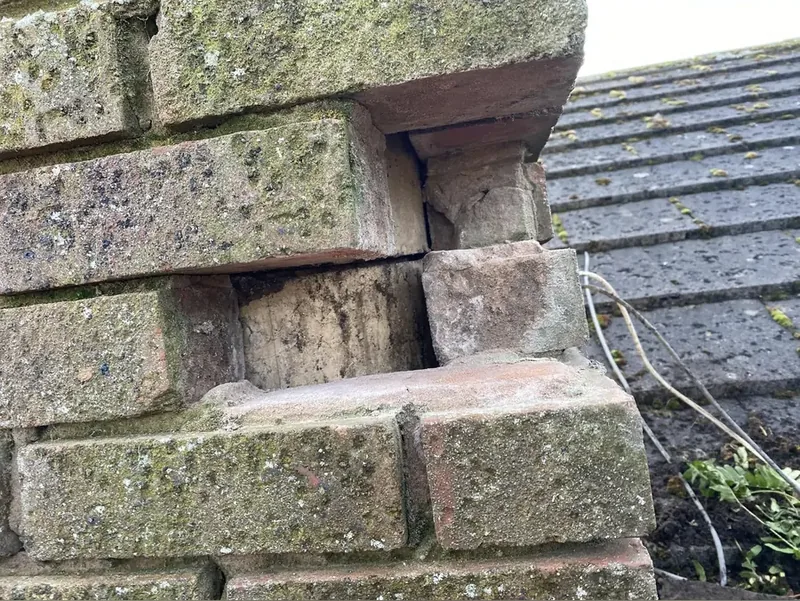
When an aerial is subjected to strong winds, considerable forces can be transferred through the mast and into the bracket. Over time, this can loosen the fixing or damage the surrounding brickwork, particularly on older chimney stacks where the mortar may already be deteriorating.
Chimneys are constantly exposed to the weather, and the last thing they need is unnecessary pressure concentrated on a small area of masonry.
For me, a properly installed chimney lashing system is a far more reliable method of securing an aerial, provided the chimney itself is structurally sound.
I’ve Seen What Can Happen
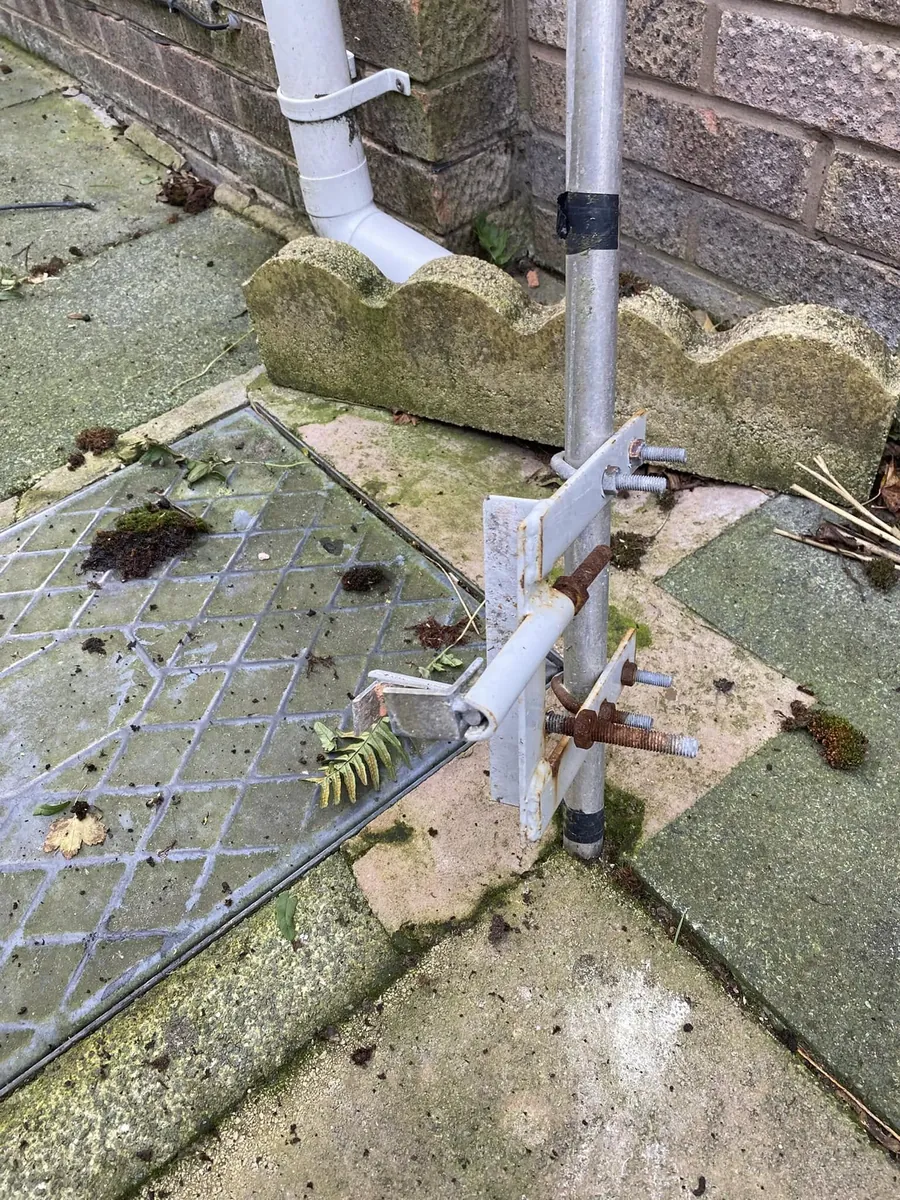
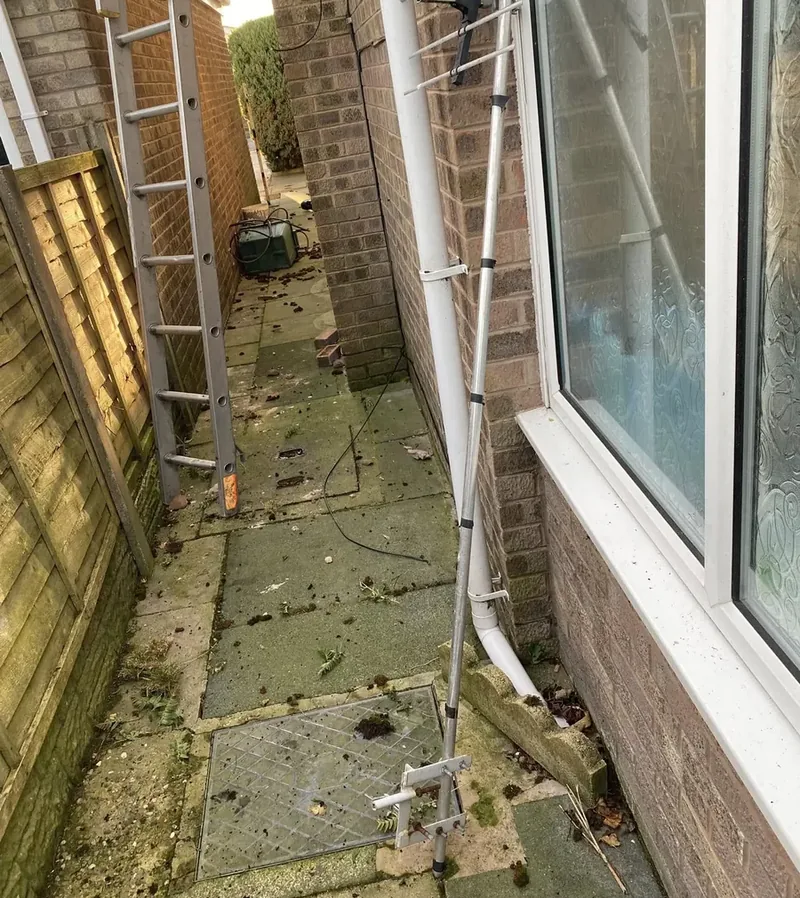
Last year, I was called out to a property where a TV aerial had fallen down following the failure of a self-supporting chimney bracket.
My job was to remove the damaged aerial and make the area safe. Seeing the consequences first-hand only reinforced the decision I’d made many years earlier never to use these types of brackets.
The photographs below illustrate the problems that can occur with this type of fixing, including damage to chimney brickwork and the potential for a mounting to become insecure.
An aerial falling from roof height isn’t simply an inconvenience. It can cause significant damage to property and, more importantly, could seriously injure somebody below.
How I Prefer to Install Chimney-Mounted Aerials
At Pegasus Aerials, Satellites & Starlink, I prefer to use traditional chimney lashing systems, which use galvanised wire cable wrapped around the chimney stack to secure the aerial mounting without drilling into the brickwork.
My preferred option is an 8-inch chimney cradle, which provides a secure mounting arrangement and helps distribute the load across a wider area of the chimney stack.
For certain budget installations, I may use a 6-inch chimney bracket, provided the conditions are suitable. In these cases, I limit the mast height to a maximum of 4 feet and ensure the wind loading is not excessive.
The size and weight of the aerial, mast height, exposure to prevailing winds and condition of the chimney all need to be considered before deciding which mounting arrangement is appropriate. For further information about professional aerial installation standards, the Confederation of Aerial Industries (CAI) provides industry guidance and codes of practice.
Even a properly installed chimney lashing system relies on sound brickwork. If the chimney is in poor condition, I would recommend an alternative mounting location rather than risk damaging the stack.
Why You Should Never Drill Into a Chimney Stack
Another practice I strongly advise against is drilling directly into a chimney stack to secure an ordinary wall bracket.
Unlike a substantial supporting wall, a chimney stack is particularly exposed to the elements. Drilling into the brickwork and using expanding fixings can place additional stress on individual bricks and mortar joints.
Over time, the forces generated by an aerial moving in strong winds can contribute to cracking, loosening of the brickwork and potentially serious damage to the chimney.
My rule is simple: never drill into a chimney stack to mount a TV aerial.
Where a chimney is suitable for supporting an aerial, I always use a properly installed galvanised wire lashing system that wraps around the stack and distributes the load more evenly.
If the chimney is already showing signs of deterioration, the safest option is to find an alternative mounting position.
A Good Aerial Installation Is About More Than Just a Picture
It’s easy to judge a TV aerial installation by whether the television receives a good picture. But a quality installation should also be mechanically secure, use suitable materials and be designed to withstand the British weather for years to come.
Having worked in the aerial industry since the 1980s, I’ve learned that taking shortcuts rarely pays off in the long run.
Those old “bang bang” brackets might have been quick to fit, but they’re one shortcut I’ve never been prepared to take.
At Pegasus Aerials, Satellites & Starlink, I believe in doing the job properly, using quality materials and choosing the right mounting arrangement for each property.
If you’re concerned about an existing aerial mounting, or you’re considering a new installation, take a look at our TV Aerial Installation & Repairs service or get in touch for advice.